

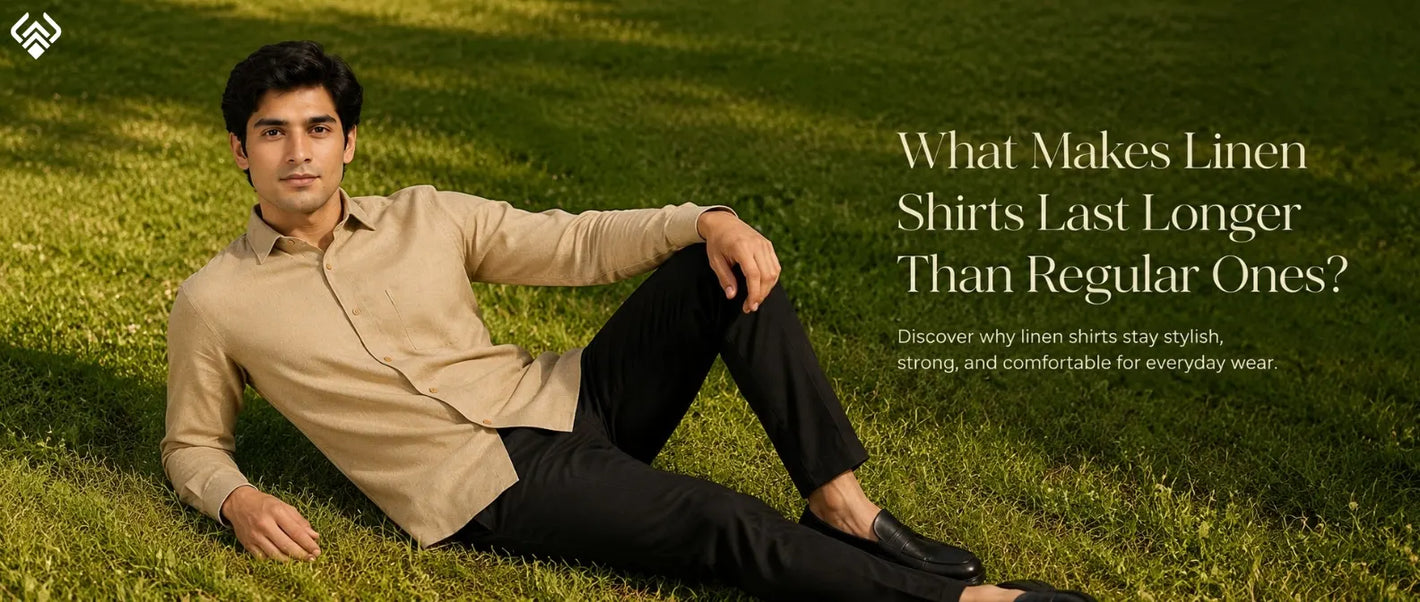
Linen shirts last longer than regular ones because flax fiber is naturally stronger than cotton, doesn't stretch out of shape easily, and actually gains strength when wet instead of weakening the way most fabrics do. A well-made linen shirt can hold up for a decade or more of regular wear, while a typical cotton or cotton-blend shirt often shows visible wear, thinning, or pilling within two to three years. The difference isn't marketing — it comes down to the physical structure of the fiber itself.
That said, not every linen shirt is built to last, and durability depends just as much on weave quality and how you care for it as it does on the raw fiber. Once you understand what's actually happening at the fiber level, it becomes much easier to spot a linen shirt that will hold up for years versus one that will fall apart after a season.
Why Flax Fiber Is Stronger Than Cotton
Flax, the plant linen comes from, produces a fiber that's naturally longer and more tightly structured than cotton fiber. Cotton fibers are short, fluffy, and somewhat fragile individually, which is why cotton fabric relies on tight spinning to hold its strength. Flax fibers, by contrast, are long, straight, and dense with cellulose, giving each individual thread significantly more tensile strength before it snaps or frays.
This difference shows up clearly under repeated stress. A cotton shirt subjected to years of washing, stretching, and friction gradually breaks down at the fiber level, which is why cotton shirts often develop thin spots, small holes, or a worn, see-through quality at the elbows and collar over time. Linen resists this kind of breakdown far longer because the fiber itself simply has more raw strength to begin with, and that strength doesn't disappear the way cotton's does with age.
Does Linen Get Stronger When Wet
Yes, and this is one of linen's more surprising properties. Unlike most natural fibers, which lose some strength when saturated with water, flax fiber actually becomes up to 20% stronger when wet. This matters enormously for anyone who washes their shirts regularly, since washing is exactly the moment when fabric experiences the most mechanical stress from agitation, stretching, and friction inside a machine.
Beach Special


Cotton, by comparison, loses a small percentage of its strength when wet, which is part of why cotton garments are more prone to washing-related wear than linen ones. A linen shirt that goes through a wash cycle is, counterintuitively, at its strongest point during that exact moment, which explains why linen garments can survive hundreds of wash cycles without the fiber degrading the way cotton eventually does. This single property is arguably the biggest reason linen shirts have a reputation for outliving almost every other fabric in a wardrobe.
How Weave Density Affects Shirt Longevity
Fiber strength only tells half the story, because how tightly that fiber is woven determines how the finished shirt actually performs over years of wear. A linen shirt woven at a higher thread density, generally in the range of 180 to 220 GSM (grams per square meter), holds up to repeated wear far better than a very lightweight, loosely woven linen closer to 120 GSM. The tighter weave distributes stress more evenly across the fabric, which prevents the kind of thinning and fraying that shows up first at high-friction points like the collar, cuffs, and underarms.
This is why two shirts made from the same flax fiber can age completely differently depending entirely on how they were constructed. A loosely woven linen shirt might feel airier when it's new, but it's also more likely to develop small snags or thin patches within the first year of regular wear. A denser weave takes slightly longer to soften but rewards that patience with a shirt that holds its shape and structure for years rather than months.
What Happens to Linen After Years of Wear and Washing
This is where linen genuinely separates itself from most other fabrics. Rather than degrading with age the way cotton and synthetic blends do, linen goes through a well-documented softening process where the fiber relaxes and the weave loosens slightly with each wash, without losing structural integrity. A linen shirt that's five years old and has been through hundreds of washes typically feels noticeably softer and drapes better than it did when new, while a five-year-old cotton shirt in the same rotation usually shows thinning, fading, and a stretched-out collar.
Anyone who has kept a good linen shirt in regular rotation for several years notices this firsthand. The color may soften slightly and the fabric develops a broken-in, almost lived-in quality, but the structural integrity of the weave stays largely intact as long as it's been cared for properly. This is a fundamentally different aging pattern than cotton, which tends to look progressively more tired and less structured the longer it's worn, even with careful washing.
How Washing Habits Extend or Shorten Linen's Lifespan
Even the strongest fiber can be undone by poor washing habits, and this is where a lot of otherwise high-quality linen shirts get shortchanged. Washing linen in cold or lukewarm water, generally below 30°C (86°F), protects the fiber's structure far better than hot water, which accelerates fiber breakdown and increases the risk of shrinkage over repeated washes. Overloading the washing machine is another common mistake, since linen needs room to move without being twisted tightly against other garments, which can weaken fibers at the fold points over time.
Drying matters just as much as washing. High-heat tumble drying is one of the fastest ways to shorten a linen shirt's lifespan, since repeated heat exposure gradually breaks down the cellulose structure that gives flax its strength. Air-drying linen, or using a low-heat setting if a machine dryer is necessary, preserves the fiber's integrity and keeps the shirt performing well for years longer than aggressive high-heat drying would allow. [Link: linen-care-guide] covers the complete washing and drying routine that keeps linen shirts in the best possible condition long-term.
Linen vs Cotton vs Polyester: A Durability Comparison
Here's a factual look at how linen stacks up against the fabrics most commonly used in shirts, comparing durability, breathability, care requirements, and where each one performs best. This breakdown is useful for anyone deciding which fabric is worth the investment for long-term wear.
Men Linen Classic


|
Fabric |
Durability |
Breathability |
Strength When Wet |
Care Level |
Best Use Case |
|
Linen |
Very High (improves with age) |
Very High |
Increases up to 20% |
Moderate (cold wash, low-heat dry) |
Long-term daily wear, hot climates |
|
Cotton |
Moderate |
High |
Decreases slightly |
Low to Moderate |
Everyday basics, short-to-mid-term wear |
|
Polyester |
High (resists tearing, not aging well visually) |
Low |
Unaffected |
Very Low |
Budget shirts, activewear |
|
Silk |
Low to Moderate |
Moderate |
Decreases significantly |
High (often dry clean only) |
Formalwear, delicate occasion pieces |
|
Rayon/Viscose |
Low |
Moderate to High |
Decreases significantly |
Moderate to High |
Lightweight drape pieces, short-term wear |
What stands out here is that linen is the rare fabric that gets structurally stronger under the exact conditions, like washing, that wear most other fabrics down. Polyester technically resists tearing, but it doesn't age gracefully; it tends to pill, retain odor, and look visibly worn even while the fibers themselves remain intact. Linen ages the opposite way, improving in feel while holding its structural strength for years.
Frequently Asked Questions
How many years can a good linen shirt actually last?
A well-constructed linen shirt, cared for properly, can realistically last 10 to 15 years or longer, with many people keeping favorite linen pieces in rotation for even longer than that. The lifespan depends heavily on weave density and washing habits, since a loosely woven, cheaply made linen shirt won't hold up nearly as long as one woven at 180 GSM or higher. Anyone who has owned a genuinely good linen shirt for several years usually notices it gets more comfortable rather than more worn out, which is unusual compared to most other fabrics.
Does linen shrink a lot the first time you wash it?
Linen typically shrinks somewhere between 3% and 5% during its first two or three washes before the fiber stabilizes and stops shrinking further. This is a normal part of the fiber relaxing into its washed state, and it's why many linen garments are pre-washed or "stone-washed" before sale to minimize surprises after the first home wash. Washing in cold water from the very first wash, rather than hot, keeps shrinkage on the lower end of that range.
Is expensive linen actually more durable, or is it just marketing?
Higher-priced linen is generally more durable, but the price difference usually reflects genuine differences in fiber quality and weave density rather than pure branding. Long-staple flax fiber, which is more expensive to source and process, produces a stronger, smoother thread than short-staple flax, and that difference is noticeable in how the finished shirt holds up over years of wear. That said, price alone isn't a guarantee, and checking the weave density and fiber sourcing is a more reliable indicator of durability than price tag alone.
Why does my linen shirt feel stiff when it's new but soft after a few washes?
New linen feels stiffer because the flax fibers haven't yet relaxed from the finishing and starching process applied during manufacturing. Each wash gradually loosens the weave and softens the individual fibers, which is why linen goes through a noticeable transformation over its first five to ten washes before settling into the soft, broken-in feel it's known for. This is completely normal and actually a sign of genuine, unfinished linen rather than a synthetic blend designed to feel soft immediately.
Do linen-cotton blends last as long as pure linen shirts?
Linen-cotton blends generally don't last quite as long as 100% linen, since the cotton component doesn't share linen's wet-strength advantage or its long-term fiber durability. That said, a good linen-cotton blend, often around 55% linen and 45% cotton, offers a reasonable middle ground with slightly softer initial feel and still respectable durability compared to pure cotton. If long-term durability is the top priority, pure linen remains the stronger choice, but a quality blend is a fair compromise for those who want linen's benefits with a softer break-in period.
Can linen shirts handle frequent wear better than everyday cotton shirts?
Yes, linen shirts generally handle frequent, regular wear better than cotton shirts because the fiber resists the stretching, thinning, and fraying that cotton develops under repeated friction and washing. Cotton shirts worn several times a week often show visible wear, particularly at the collar and cuffs, within a year or two, while a linen shirt in the same rotation typically shows softening rather than deterioration. This makes linen a particularly strong choice for anyone building a small, durable wardrobe of pieces meant for daily, long-term use.
The real difference between a linen shirt that lasts a decade and one that falls apart in a year almost always comes down to how it was made in the first place. Fiber strength gives linen a head start, but weave density and finishing are what turn that raw strength into a shirt that actually holds up to years of washing, wearing, and packing for travel. If you're building a wardrobe around pieces meant to last rather than get replaced every season, it's worth paying attention to how a shirt is constructed rather than just what it's made from. [Link: linen-shirts] is a good place to see the difference a properly woven, well-finished linen shirt makes once it's been through a few dozen washes.

