

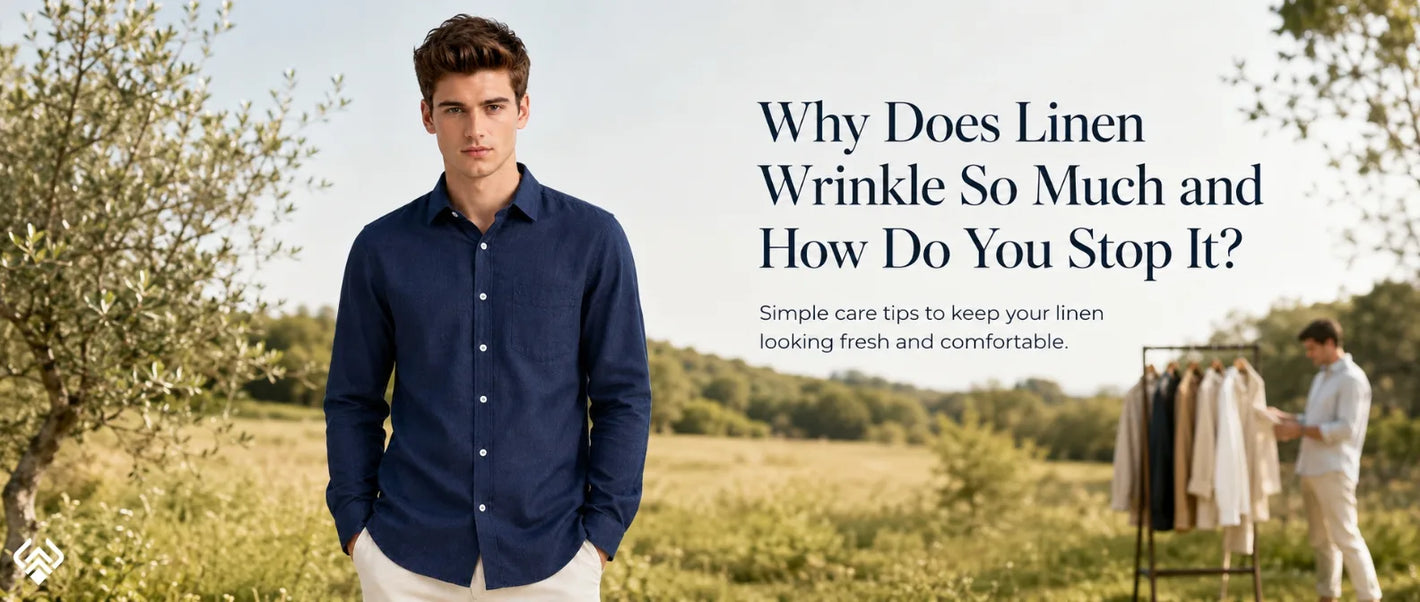
Linen wrinkles because its fibers are stiff, low in elasticity, and packed with cellulose that holds a crease the moment you sit, bend, or fold. That's the short answer. Linen wrinkles more than cotton or polyester because flax fiber lacks the natural "spring back" that stretchier fibers have — once the fiber bends, it tends to stay bent until heat, steam, or moisture resets it. If you've ever pulled a linen shirt out of your bag looking like it survived a storm, this is exactly why.
The good news is that wrinkling isn't a flaw you have to fight forever. Once you understand why linen creases the way it does, you can work with the fabric instead of against it, and even learn to enjoy the slightly rumpled look that linen is famous for.
What Makes Linen Wrinkle More Than Other Fabrics
Linen comes from the flax plant, and its fibers are naturally rigid and straight compared to cotton or wool. Cotton fibers are curly and somewhat elastic, which lets them flex and recover. Flax fibers, on the other hand, are stiff and cylindrical, with very little natural elasticity. When you crease a flax fiber, it doesn't bounce back the way a springier fiber would — it holds the fold almost like a piece of paper.
This stiffness comes from linen's high cellulose content, which is denser and less flexible than the cellulose structure found in cotton. The tighter, more crystalline molecular structure of flax gives linen its famous durability and cool, breathable feel, but that same structure is exactly what makes it resistant to bouncing back into shape. In practical terms, the qualities that make linen a phenomenal warm-weather fabric are the same qualities that make it wrinkle after twenty minutes of wear.
Is Linen Wrinkling a Sign of Poor Quality
No, and this is one of the most common misunderstandings about the fabric. Wrinkling is a structural characteristic of flax fiber, not a defect in weaving or finishing. In fact, higher-quality linen — the kind with a higher thread density and long-staple flax fibers — often wrinkles in soft, rounded creases rather than sharp, papery lines. Lower-quality linen blended with weak or short fibers tends to wrinkle in a way that looks tired and flat rather than textured.
Linen Mark


After years of working with linen garments, the difference becomes obvious to the eye. Well-made linen softens with every wash, and its wrinkles start to look intentional rather than accidental. This is part of why linen has held its place in warm-climate wardrobes for thousands of years: the wrinkle is part of the fabric's character, not a sign that something went wrong.
How Washing and Drying Affect Linen's Wrinkle Pattern
The way you wash and dry linen has a direct and lasting effect on how much it creases. Hot water breaks down the fiber's structure faster and increases the likelihood of deep, stubborn wrinkles, so washing linen in cold or lukewarm water — generally below 30°C (86°F) — helps the fibers hold their shape better over time. Overloading the washing machine is another common mistake, since linen needs room to move freely in the drum; a cramped load twists the fibers into tighter creases than a properly loaded one.
Drying is where most of the damage actually happens. Tumble drying linen on high heat is the fastest way to lock in harsh, deep-set wrinkles, because heat sets the fiber's crystalline structure into whatever position it's crumpled in in the dryer. Air-drying linen while it's still slightly damp, ideally hung rather than folded over a rack, lets gravity pull out a large percentage of wrinkles before you ever touch an iron. [Link: linen-care-guide] covers the full washing and drying routine in more detail if you want a complete reference.
The Right Way to Iron or Steam Linen
Linen responds best to heat combined with moisture, which is why ironing it bone-dry is far less effective than ironing it while slightly damp. A hot iron — most machines have a dedicated linen setting around 230°C (445°F) — combined with a light mist of water relaxes the fiber enough to smooth out creases without scorching the fabric. Steaming works well for structured pieces like blazers or dresses where a flat iron would flatten intentional drape or pleating.
For anyone who wears linen regularly, a fabric steamer ends up being a better long-term investment than an iron, since it reshapes the fiber without the risk of shine marks or heat damage that a hot iron can leave on darker linen dyes.
How to Stop Linen From Wrinkling So Easily
There's no permanent fix that makes linen wrinkle-free while keeping its natural texture, but there are several habits that noticeably reduce how fast and how deeply it creases. Hanging linen garments immediately after wearing them, rather than draping them over a chair or stuffing them in a drawer, prevents fibers from setting into a folded position overnight. Choosing a linen blend with a small percentage of cotton or a touch of elastane also reduces wrinkling significantly, since it introduces some of the elasticity that pure flax lacks, though it does trade away a bit of linen's signature crispness.
Plain Shirt


Storage matters just as much as care. Folding heavy linen pieces along the same lines every time trains permanent creases into the fabric, so rotating fold lines or hanging bulkier items like jackets and trousers keeps the fiber from developing a fixed memory. Packing linen in a suitcase works best when it's rolled rather than folded flat, since rolling distributes the fiber's tension more evenly across the garment. is a good place to see how a well-constructed linen shirt holds its shape differently from a cheaper, thinner weave.
Linen vs Other Fabrics: A Quick Comparison for Wrinkle Resistance
Here's a factual side-by-side look at how linen compares to the fabrics most people weigh it against when wrinkling is a deciding factor. This table breaks down breathability, durability, care level, and the situations each fabric suits best, so you can see exactly where linen's trade-offs come from.
|
Fabric |
Wrinkle Resistance |
Breathability |
Durability |
Care Level |
Best Use Case |
|
Linen |
Low |
Very High |
Very High (improves with age) |
Moderate (cold wash, low-heat dry) |
Hot climates, summer wear, breathable layers |
|
Cotton |
Moderate |
High |
Moderate to High |
Low to Moderate |
Everyday casualwear, all-season basics |
|
Polyester |
Very High |
Low |
High (resists wear, not breathable) |
Very Low |
Activewear, travel clothing, budget garments |
|
Silk |
Low to Moderate |
Moderate |
Low to Moderate (delicate) |
High (often dry clean only) |
Formalwear, evening pieces, lightweight layering |
|
Rayon/Viscose |
Low |
Moderate to High |
Low to Moderate |
Moderate to High |
Flowy dresses, warm-weather drape pieces |
The pattern is clear: fabrics that wrinkle the least, like polyester, tend to trade away breathability and the natural feel that makes linen desirable in the first place. Linen sits at one end of that spectrum on purpose — it's the fabric you choose when comfort in heat and long-term durability matter more than a flawless, crease-free look.
Frequently Asked Questions
Does 100% linen wrinkle more than a linen blend?
Yes, 100% linen wrinkles more visibly than a linen-cotton or linen-elastane blend because pure flax fiber has no elastic component to help it recover its shape. Blends soften the crease pattern and make the fabric behave more like cotton, though they also dilute some of linen's breathability and signature texture. If you want the coolest, most breathable option and don't mind visible creases, pure linen is worth the trade-off; if you want a lower-maintenance middle ground, a linen-cotton blend around 55/45 tends to perform well in daily wear.
Can you make linen permanently wrinkle-free?
No fabric that's genuinely 100% linen can become permanently wrinkle-free, since the tendency to crease comes from the fiber's basic molecular structure rather than a finishing treatment. Some manufacturers apply wrinkle-resistant coatings, but these coatings wear off after repeated washing and can slightly stiffen the fabric's natural drape. The most realistic goal is reducing wrinkle severity through proper washing, drying, and storage rather than expecting a flat, ironed look that lasts all day.
Why does my linen shirt wrinkle within minutes of putting it on?
This happens because body heat and movement immediately start bending the fiber at pressure points like elbows, underarms, and wherever the fabric folds when you sit down. It's a normal characteristic of the fiber, not a sign of a poorly made shirt, and it tends to happen faster with lighter-weight linen weaves than with heavier, more structured ones. If this bothers you, look for a mid-weight linen around 180 to 200 GSM, which holds its shape a bit longer than ultra-lightweight summer weaves.
Is it bad to iron linen every time you wear it?
Ironing linen every wear isn't harmful as long as you're using moderate heat and avoiding scorching temperatures, but it is more effort than most people want to put in regularly. Many linen wearers find it easier to accept a soft, natural wrinkle as part of the fabric's look and reserve ironing for occasions that call for a sharper appearance. Steaming is a gentler daily alternative that refreshes the fabric without the repeated heat exposure that ironing involves.
Does linen get softer and less wrinkled over time?
Yes, linen genuinely softens with repeated washing as the fibers relax and the weave loosens slightly, and this softening does change how the fabric wrinkles. Older, well-worn linen tends to fall into looser, more rounded creases instead of the stiffer, sharper wrinkles you see in brand-new pieces. This is one of the reasons long-time linen wearers often prefer garments that have been through a dozen or more wash cycles over ones fresh off the shelf.
What's the best way to store linen so it doesn't wrinkle in the closet?
Hanging linen garments on padded or wide hangers, rather than folding them into drawers, is the most effective way to prevent set-in creases while they're in storage. For linen pieces that must be folded, such as heavier trousers or table linens, rotating the fold lines every so often keeps the fiber from memorizing a single crease pattern. Keeping linen in a closet with reasonable airflow, rather than tightly packed between other garments, also helps it hold its shape better between wears.
Linen's wrinkle is part of its character, and once you stop treating it as a flaw, caring for it becomes a lot simpler. What matters more than chasing a perfectly smooth finish is starting with linen that's woven well in the first place, since a dense, well-constructed weave holds up to washing, folding, and travel far better than a thin, low-cost one ever will. Good linen gets better with every wash, softening into the kind of texture that looks effortless rather than unkempt, which is exactly the point of wearing it.

