
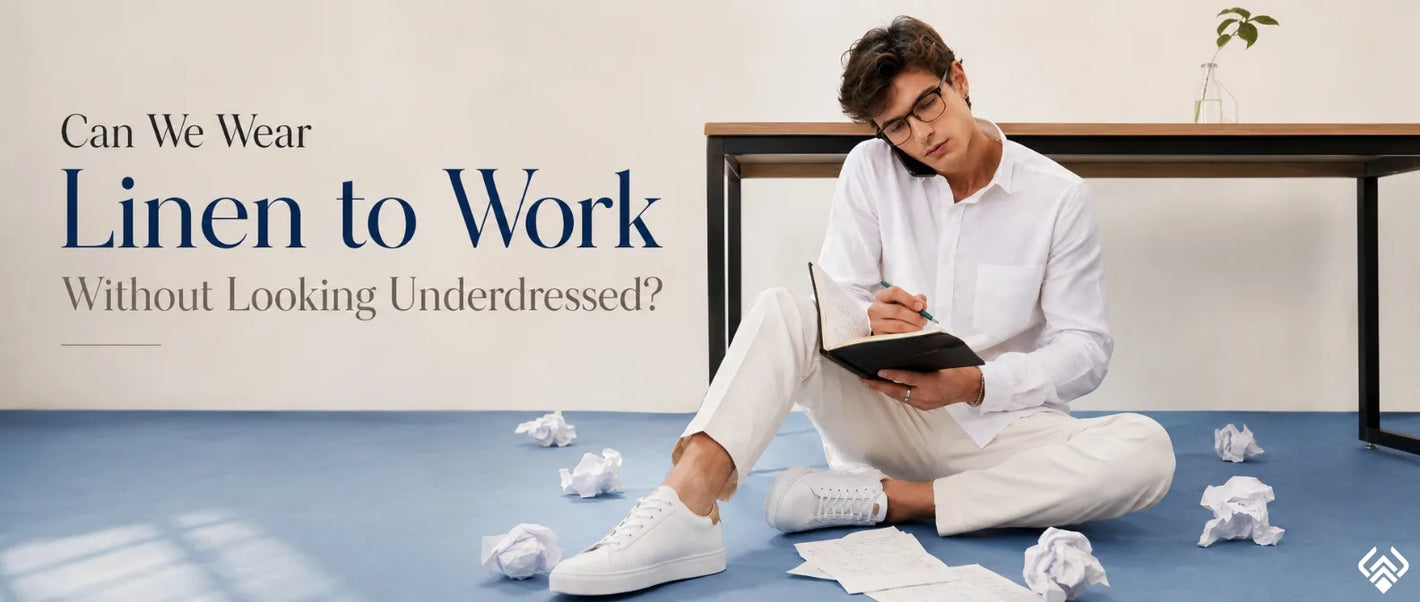
Yes, you can wear linen to work without looking underdressed, as long as you choose the right weight, weave, and cut. Linen becomes office-appropriate when it sits above 170 GSM, holds a tight plain weave, and is tailored rather than boxy. The fabric itself is not the problem. Thin, loosely woven, oversized linen is what reads as beachwear, not linen in general.
That distinction matters because most of the hesitation around linen in professional settings comes from one bad experience: a shirt that wrinkled by 10 a.m., or a pair of trousers that looked more like sleepwear than workwear. Once you understand what separates resort linen from office linen, the fabric stops being a risk and starts being one of the most comfortable options you own for long workdays, especially in warmer climates or poorly air-conditioned offices.
Why Linen Gets a Bad Reputation in Office Settings
Linen's reputation problem is almost entirely about weight and construction, not the fiber itself. Lightweight linen, often in the 100 to 140 GSM range, is woven loosely to maximize airflow for holiday shirts and beach cover-ups. That same looseness is what causes the fabric to crease heavily, cling awkwardly, and lose its shape by midday. When people say linen "doesn't work for the office," they are usually describing this specific category of linen, not the fabric as a whole.
Premium Linen


Heavier linen behaves differently. At 170 to 220 GSM, the yarns are packed tighter, the drape is more structured, and the fabric holds a crease line rather than a crumple. This is the linen used in tailored shirting and suiting, and it is the version that survives a full day at a desk, several meetings, and a commute without looking slept in. If you have only worn lightweight vacation linen, it makes sense that office linen feels like an unknown.
The GSM and Weave Factors That Make Linen Office-Appropriate
Fabric Weight and Structure
GSM, or grams per square meter, is the single most useful number when judging whether a linen piece belongs in a professional wardrobe. Below 150 GSM, expect a soft, breathable fabric that wrinkles fast and works best for casual weekend wear. Between 170 and 200 GSM, linen picks up enough body to hold a collar, a pleat, or a trouser crease through several hours of wear. Above 200 GSM, you are looking at linen blends or heavier weaves typically used in structured blazers and outerwear, where crease resistance matters even more.
Weave Tightness and Drape
Weave density works alongside weight. A tightly woven linen resists the see-through effect that makes some shirts look inappropriate under office lighting, and it drapes closer to the body instead of billowing. Open, basket-style weaves are the ones responsible for linen's casual, breezy image, and they are the ones to avoid for client meetings or client-facing roles. When shopping, hold the fabric up to a window; if light passes through easily, it belongs in your weekend rotation, not your work one.
How to Style Linen for a Polished, Professional Look
Tailoring and Fit
Fit does more to signal "professional" than fabric choice alone. A linen shirt with a defined collar, set-in sleeves, and a tapered waist reads as intentional dressing, while an oversized, unstructured linen shirt reads as loungewear regardless of GSM. The same applies to trousers: a straight or slightly tapered leg with a clean waistband looks deliberate, while pull-on, elastic-waist linen pants tend to look like sleepwear even in a good fabric. [Link: linen-shirts] is a useful place to compare tailored fits if you are shopping specifically for desk-to-meeting wear.
Beach Special


Color Choices That Read as Formal
Color carries as much weight as cut when it comes to perception. Navy, charcoal, olive, and deep taupe linen shirts and trousers read as considered and formal, while very light or bright shades tend to lean casual and vacation-adjacent. Pairing a structured navy linen shirt with dark trousers and leather shoes closes the gap between "linen" and "office attire" almost entirely, because the eye reads color and silhouette before it registers fabric type.
Linen vs Other Work Fabrics: A Side-by-Side Comparison
The table below breaks down how linen compares to the other fabrics most commonly worn in office settings, across the factors that actually affect a workday: how it breathes, how long it lasts, how much upkeep it needs, and where it performs best.
|
Fabric |
Breathability |
Durability |
Care Level |
Best Work Use Case |
|
Linen (170–200 GSM) |
Excellent |
High, strengthens slightly when wet |
Moderate, benefits from steaming |
Warm climates, all-day comfort, business casual |
|
Cotton (Poplin/Oxford) |
Good |
High |
Low to moderate |
Year-round shirting, standard office wear |
|
Polyester Blend |
Low to moderate |
Very high |
Low, wrinkle-resistant |
Air-conditioned offices, frequent travel |
|
Silk |
Moderate |
Low, delicate |
High, often dry-clean only |
Formal events, occasional office wear |
|
Wool Blend Suiting |
Moderate |
High |
Moderate, dry-clean recommended |
Cooler climates, formal meetings |
Linen's standout advantage is thermal comfort. Unlike polyester, which traps heat, linen's fiber structure allows constant airflow, which is why it remains the preferred choice for warm-climate offices and long commutes. Its main tradeoff is wrinkling, which is manageable with the right weight and a five-minute steam, not a reason to avoid the fabric altogether.
Washing and Care Habits That Keep Linen Looking Crisp at Work
How you wash linen affects how office-ready it looks the next morning as much as the fabric weight does. Washing at 30°C on a gentle cycle preserves the fiber's natural strength and prevents the premature thinning that happens with repeated hot washes above 40°C. Linen is one of the few fabrics that actually gains a small amount of tensile strength when wet, which is part of why it holds up so well over years of regular wear compared to more delicate materials like silk.
Air drying, or a low-heat tug dry followed by steaming, keeps the fabric's structure intact and avoids the shrinkage that high heat causes over repeated cycles. A quick steam before wearing, rather than a full iron, softens the deeper creases without flattening the fabric's natural texture completely, which is part of what gives linen its lived-in, tailored look rather than a stiff, over-pressed appearance. For a full breakdown of wash temperatures and drying methods by weight, [Link: linen-care-guide] covers the specifics in more depth.
Travel Must-haves


None of this requires much extra effort once it becomes routine, and the payoff is a shirt or trouser that still looks sharp after a full year of regular office wear, not just the first few washes. Choosing linen with the right GSM, the right weave, and a tailored cut, then caring for it properly, is really the entire answer to whether linen belongs at work. If you are building out a warm-weather work wardrobe, looking for pieces made from densely woven, higher-GSM linen designed specifically for structure and longevity will save you the trial and error most people go through with beach-weight linen first.
Frequently Asked Questions
Is linen too casual to wear to the office?
Linen is not inherently too casual, but low-GSM, loosely woven linen often looks that way. Once you move to fabric above 170 GSM with a tighter weave and tailored fit, linen shirts and trousers read as business casual rather than beachwear. Most of the "too casual" reaction comes from fit and weight, not the fiber itself.
Does linen wrinkle more than cotton?
Yes, linen typically wrinkles more than cotton because its fibers are stiffer and less elastic, so it creases rather than folds. Heavier, tightly woven linen wrinkles noticeably less than lightweight linen, and a quick steam in the morning resolves most of the visible creasing. Cotton wrinkles less overall but does not offer the same breathability in hot weather.
What GSM linen is best for office shirts?
For office shirting, linen between 170 and 200 GSM offers the best balance of structure and breathability. Below that range, shirts tend to wrinkle heavily and lose shape by midafternoon. Above 220 GSM, linen starts to feel closer to a jacket-weight fabric, which works for blazers but feels heavy for a daily dress shirt.
Can linen trousers be worn with a blazer for a formal meeting?
Yes, structured linen trousers in a darker shade pair well with a blazer for client meetings, particularly in warmer months when wool feels too heavy. Choosing a straight-leg cut and a solid, deeper color keeps the look formal rather than resort-inspired. Pairing with leather shoes rather than sandals reinforces the professional read.
How do I stop linen from looking wrinkled by lunchtime?
Starting with a heavier, tightly woven linen is the biggest factor, since lightweight linen creases within an hour regardless of care. Beyond fabric choice, a proper steam before leaving the house sets the fibers in a way that resists creasing longer than ironing alone. Sitting and moving naturally throughout the day will still create some texture, which is expected and part of linen's character rather than a flaw to eliminate entirely.
Is linen appropriate for a job interview?
Linen can be appropriate for an interview if the role and industry lean business casual and the piece is tailored, higher GSM, and in a neutral or dark color. For more conservative or formal industries, a wool or cotton blend is typically the safer choice, with linen reserved for warmer months once you understand the workplace dress culture. When in doubt, a structured linen blazer over a cotton shirt offers a middle ground.

