

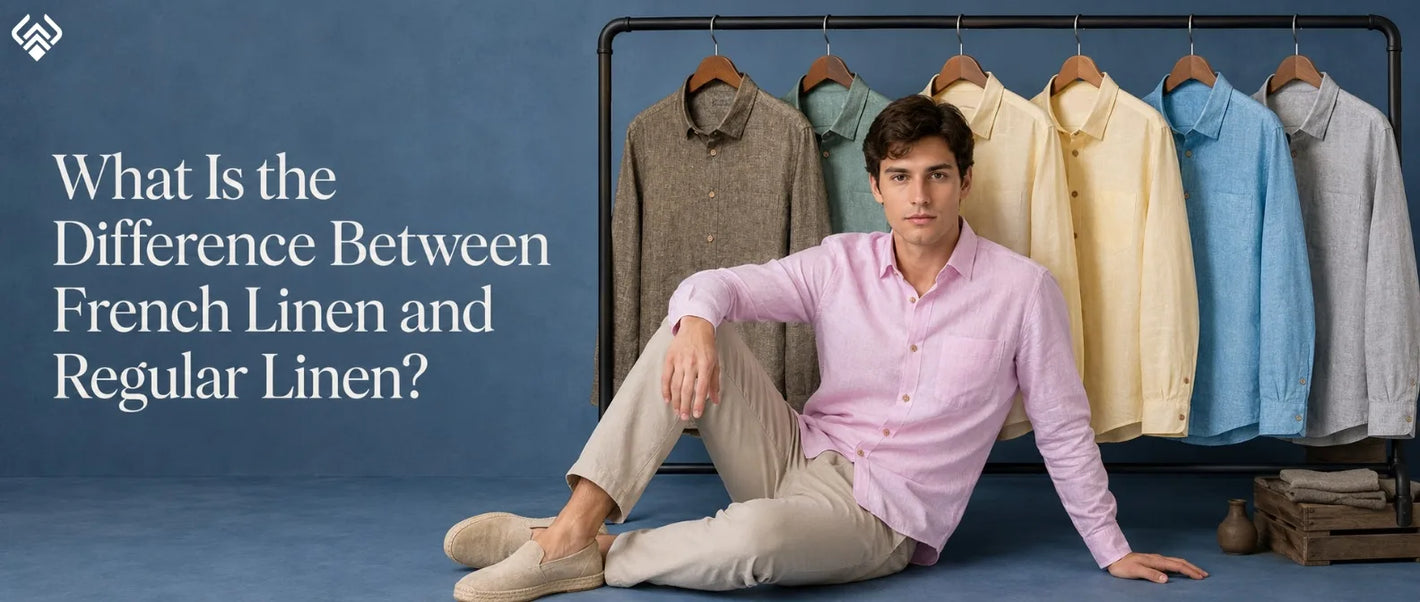
The difference between French linen and regular linen comes down to the flax itself, not just where it was sewn. French linen refers to flax grown primarily in Normandy and northern France, where cool, damp coastal weather produces longer, finer fibers that spin into stronger, smoother yarn. Regular linen can be made from flax grown anywhere, including Eastern Europe or parts of Asia, and often uses shorter fiber staples that weave into a coarser, less durable fabric.
That fiber length matters more than most shoppers realize. Long-staple flax, the kind French growing conditions consistently produce, spins into yarn with fewer joins and fewer weak points, which is why French linen garments tend to soften with age rather than thin out or develop holes. Shorter staple fibers, common in mass-produced linen from other regions, need more twists and joins per yarn, which creates a rougher hand feel and a fabric that wears out faster under regular use.
Where French Linen Actually Comes From
France grows roughly 80 percent of the world's flax supply, concentrated in a coastal band running from Normandy through Belgium and the Netherlands, an area with the exact combination of humidity, rainfall, and mild temperatures that flax needs to grow tall and fiber-rich. This region did not become the center of flax farming by branding alone; the climate genuinely produces better raw material, which is why so much of the world's high-quality linen yarn is still spun from flax grown here even when the final weaving or sewing happens elsewhere.
Full Sleeve Shirts


This is also where the "European Flax" certification comes from, a traceability standard that confirms the flax was grown, harvested, and processed within Western Europe under specific environmental and labor standards. Seeing this certification on a linen product is one of the more reliable ways to confirm you are actually getting French-grown flax rather than a fabric simply labeled "linen" with no origin transparency behind it.
Fiber Length and Yarn Quality
Why Longer Staple Fibers Matter
Flax fiber length is measured before spinning, and French-grown flax typically produces staples in the range of 25 to 30 centimeters, compared to shorter, more fragmented fibers common in flax grown under less ideal conditions. Longer fibers mean the spinning process needs fewer twists to hold the yarn together, which results in a smoother, stronger thread that resists pilling and breaking over years of washing and wear. This is the technical reason French linen shirts and trousers tend to age into a softer, more supple hand feel instead of thinning at stress points like elbows and knees.
How This Affects the Finished Fabric
Once woven, this fiber difference shows up as a noticeably smoother surface texture and a slightly higher tensile strength in French linen compared to lower-grade regular linen. Fabric woven from long-staple French flax typically falls in the 170 to 200 GSM range for shirting weight, holding its structure through a full workday without the fuzzing or thinning that shorter-fiber linen develops after repeated washing. Regular linen can technically hit the same GSM number on a scale, but the yarn underneath is doing more work to get there, which shows up as reduced longevity even when the initial hand feel seems comparable in-store.
Weaving, Finishing, and Craftsmanship Differences
Fiber quality is only half the story, since weaving and finishing techniques shape the final fabric almost as much as the raw flax does. Mills working with French flax tend to use tighter, more consistent weaving tension, partly because the stronger yarn allows for it without excessive thread breakage during production. Regular linen mills working with shorter, weaker fibers sometimes compensate with looser weaves or chemical softening treatments that create a soft feel off the shelf but shorten the fabric's working life once it goes through a normal wash routine.
Casual Shirt


Finishing matters here too. French linen producers commonly use mechanical softening, like stone washing or enzyme treatments, that preserve fiber strength while still achieving a lived-in texture straight out of the packaging. Some regular linen relies more heavily on chemical softeners that feel pleasant initially but break down fiber integrity faster, which is part of why a bargain linen shirt can feel great in month one and rough or thin by month six. If you are comparing shirts across price points, [Link: linen-shirts] is a good place to see how weave and finish differ across weight categories.
French Linen vs Regular Linen vs Other Work Fabrics
The table below lays out how French linen, regular linen, and the most common alternative fabrics compare across the factors that actually affect how a garment performs over time, not just how it feels on day one.
|
Fabric |
Fiber Source |
Breathability |
Durability |
Care Level |
Best Use Case |
|
French Linen |
Long-staple flax, Western Europe |
Excellent |
Very high, softens without thinning |
Moderate |
Long-term shirting, tailored wear, heirloom pieces |
|
Regular Linen |
Short-staple flax, various regions |
Good to excellent |
Moderate, wears faster with washing |
Moderate |
Casual wear, budget-friendly staples |
|
Cotton (Poplin/Oxford) |
Cotton fiber |
Good |
High |
Low to moderate |
Year-round shirting, everyday wear |
|
Polyester Blend |
Synthetic fiber |
Low to moderate |
Very high |
Low |
Travel wear, low-maintenance office wear |
|
Silk |
Silk fiber |
Moderate |
Low, delicate |
High |
Formal wear, occasion pieces |
French linen's advantage in this comparison is longevity paired with breathability, a combination most synthetic and even some natural alternatives cannot match at the same time. Regular linen still holds up reasonably well and remains a breathable, natural option, but the difference becomes obvious after a year or two of regular washing, when French linen tends to have softened gracefully while lower-grade linen shows visible thinning or fraying at seams.
How Washing and Aging Reveal the Real Difference
The clearest way to actually feel the difference between French linen and regular linen is to wash both several times and compare. Washing at 30°C on a gentle cycle is the recommended baseline for either type, since linen fiber gains a small amount of tensile strength when wet and loses that advantage under harsh, hot-water cycles above 40°C. French linen typically shows minimal fiber breakdown after 20 or more wash cycles, while shorter-staple regular linen starts showing surface fuzz and thread thinning noticeably earlier in its wash life.
Air drying or low-heat tumble drying preserves fiber integrity in both types, but the margin for error is smaller with regular linen, since its shorter fibers have less structural reserve to begin with. A quick steam rather than a hot iron keeps either fabric looking sharp without flattening its natural texture. For a deeper breakdown of wash cycles, temperatures, and drying methods by fabric weight, [Link: linen-care-guide] walks through the specifics for both linen types.
Men Vintage


None of this means regular linen is a poor choice, since it remains a genuinely breathable, natural fabric well suited to casual and budget-conscious wardrobes. What it does mean is that the price difference between French linen and regular linen usually reflects a real, measurable difference in fiber length, strength, and how the garment will look and feel three or five years down the line, not just marketing language. If you are building pieces meant to last well beyond a single season, looking specifically for European Flax certification or clear sourcing information is the most reliable way to know which type of linen you are actually buying.
Frequently Asked Questions
Is French linen actually better quality than regular linen?
Yes, French linen is generally higher quality because it comes from longer-staple flax fibers grown in Western Europe's specific coastal climate, which produces stronger, smoother yarn. This translates into fabric that resists pilling and thinning better over years of wear and washing compared to linen made from shorter, weaker fibers. That said, quality also depends on weaving and finishing, so not every fabric labeled "French linen" is automatically premium without checking for certification.
How can I tell if linen is really French or European Flax certified?
Look for the European Flax certification label on the product tag or description, since this confirms the flax was grown, harvested, and processed within Western Europe under audited standards. Without this certification, a product labeled simply "French linen" may only reflect where it was cut and sewn rather than where the flax itself was grown. Brands transparent about sourcing typically list this certification directly on product pages.
Does French linen wrinkle less than regular linen?
Not significantly, since wrinkling is more closely tied to weave tightness and fabric weight than to fiber origin alone. Both French and regular linen will crease with wear because that is a natural characteristic of the flax fiber itself. What French linen does offer is a fabric that tends to relax into softer, more natural creases over time rather than developing weak, worn spots at fold lines.
Is French linen worth the higher price for everyday clothing?
For pieces you plan to wear regularly for several years, French linen's higher price often pays off through better fiber longevity and a softer, more comfortable hand feel that develops rather than degrades with washing. For occasional or seasonal wear where longevity matters less, regular linen offers a genuinely reasonable and breathable alternative at a lower cost. The right choice depends on how often the garment will be worn and washed over its lifetime.
Can you mix French linen and regular linen in the same wardrobe?
Yes, and most linen wardrobes naturally end up mixed, since French linen makes sense for foundational, frequently worn pieces like dress shirts, while regular linen works well for casual, seasonal items worn less often. Both types respond to the same basic care routine, including gentle 30°C washing and air drying, so mixing them does not complicate laundry habits. The main consideration is simply matching the fabric investment to how hard the garment will actually work.
Does French linen feel different to the touch than regular linen?
Yes, French linen typically feels smoother and less coarse straight off the shelf because its longer fibers require fewer twists during spinning, resulting in a finer yarn surface. Regular linen can feel similarly soft initially, especially if chemically treated, but that softness often comes from finishing rather than fiber structure and tends to fade faster with washing. Running a fabric through several wash cycles before judging texture gives a more honest comparison than a first touch in-store.


1 comment
eyq8i1