

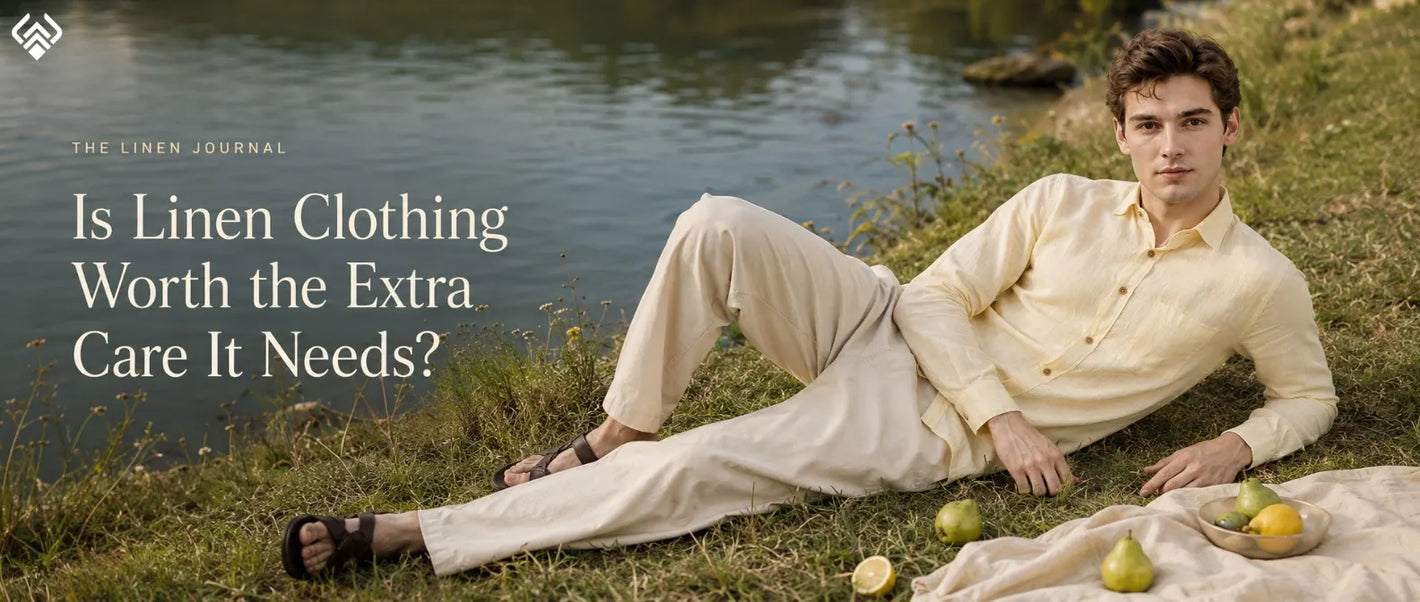
Linen clothing is worth the extra care for most people, because the small effort of gentle washing and occasional steaming pays off in a fabric that breathes better, lasts longer, and ages more gracefully than most alternatives. The care linen requires is genuinely minor compared to dry-clean-only fabrics like silk or wool, but it is more involved than throwing a polyester shirt in the wash and forgetting about it. Whether that tradeoff is worth it depends largely on how much you value comfort and longevity over convenience.
That said, this is not a blanket yes for everyone. Someone who wants zero-effort, wrinkle-proof clothing for constant travel may find linen's care requirements genuinely frustrating, while someone who values breathability, natural texture, and a fabric that improves with age will likely find the extra attention barely noticeable after the first few wash cycles. Looking honestly at what linen actually requires, rather than relying on assumptions, makes it much easier to decide whether it fits your lifestyle.
What "Extra Care" Actually Means for Linen
The care linen needs is often exaggerated in how it gets described, so it helps to be specific. Linen should be washed on a gentle cycle at around 30°C rather than a hot cycle above 40°C, since high heat stresses the fiber and shortens its lifespan over repeated washes. It benefits from air drying or a low-heat tumble dry rather than high heat, and it often needs a light steam or quick iron to look crisp rather than heavily creased. None of this is complicated, but it is a step beyond fabrics like polyester that tolerate hot washes, high heat drying, and zero ironing without any real consequence.
Under 2999


Where linen actually asks more of you is in patience and attention rather than skill. You need to remember to use a gentler wash setting, resist the urge to tumble dry on high heat out of habit, and accept that a certain amount of natural texture is part of how the fabric looks, not a flaw to eliminate entirely. Once this becomes routine, most people report it takes barely any extra time compared to washing other clothing, since it is really a setting change rather than an additional task.
The Real Payoff: How Linen Performs Over Years of Wear
Durability That Rewards Proper Care
Linen fiber is naturally strong, and it actually gains a small amount of tensile strength when wet, which is part of why well-cared-for linen garments can last significantly longer than comparably priced cotton pieces. A linen shirt washed at the right temperature and air dried regularly can remain in solid condition after five or more years of consistent wear, developing a softer hand feel without the thinning or holes that lower-quality or poorly cared-for fabric often shows by that point. This durability is the clearest return on the extra care linen asks for, since the fabric rewards attentive washing with a genuinely longer usable life.
Comfort That Improves With Age
Beyond durability, linen is one of the few fabrics that becomes more comfortable the longer you own it, provided it is cared for properly. Repeated gentle washing softens the fiber gradually, relaxing the weave just enough to improve drape and feel without compromising strength. This is different from fabrics that either stay static over time or actively degrade with each wash, and it is part of why so many linen owners describe their oldest pieces as their favorites, a pattern that simply does not happen with fabrics that are engineered for low maintenance rather than long-term wear.
Plain Shirt


When the Extra Care Might Not Be Worth It
Honesty matters here, since linen is not the right fit for every situation. If you travel constantly and need clothing that survives being crushed in a suitcase for days without attention, linen's tendency to crease deeply under those conditions can be genuinely frustrating, and a wrinkle-resistant polyester blend may serve that specific need better. Similarly, if ironing or steaming is something you are simply never going to do consistently, lightweight linen under 150 GSM will likely look more disheveled than intended most of the time, which may not align with certain professional or formal settings.
Choosing a heavier linen weight, generally in the 170 to 200 GSM range, reduces this issue significantly, since denser weaves hold their shape better and require less frequent steaming to look presentable. For anyone hesitant about linen specifically because of past experience with lightweight, poorly constructed pieces, trying a properly woven, heavier linen shirt often changes the equation entirely. includes options across different weights if you want to compare how much a heavier construction reduces the day-to-day maintenance concern.
Linen vs Other Fabrics: Weighing Care Against Payoff
The table below compares linen to the other fabrics most commonly weighed against it, focusing specifically on how much care each one demands relative to what you get back in comfort, breathability, and longevity.
|
Fabric |
Care Level |
Durability |
Breathability |
Comfort Over Time |
Best For |
|
Linen (170–200 GSM) |
Moderate, gentle wash and occasional steam |
High, strengthens slightly when wet |
Excellent |
Improves, softens without weakening |
Long-term wardrobes, warm climates |
|
Cotton (Poplin/Oxford) |
Low to moderate |
High |
Good |
Stable, minimal change |
|
|
Polyester Blend |
Low, tolerates hot wash and high heat dry |
Very high |
Low to moderate |
Stable but less breathable over time |
Travel, minimal-maintenance wardrobes |
|
Silk |
High, often dry-clean only |
Low, delicate |
Moderate |
Can degrade with improper care |
Formal or occasional wear only |
|
Wool Blend |
Moderate to high, often dry-clean recommended |
High |
Moderate |
Stable with proper storage |
Cooler climates, structured garments |
This comparison makes the tradeoff clearer. Linen sits in the middle of the care spectrum, asking more attention than cotton or polyester but far less than silk or dry-clean-only wool, while delivering breathability and long-term comfort that most of those fabrics cannot match at the same time. The fabrics that need less care, like polyester, generally give up either breathability or the way the material improves with age, which is the real tradeoff being made either direction.
Building a Low-Effort Care Routine That Still Protects Linen
Making linen's care requirements feel genuinely minor mostly comes down to building a simple, repeatable routine rather than treating each wash as a special occasion. Washing linen with similar-weight items on a gentle 30°C cycle, air drying or using low heat, and keeping a steamer or iron accessible for a quick two-minute touch-up before wearing covers nearly everything the fabric needs. Once this becomes habit, most people stop thinking of it as "extra care" at all and simply treat it as their normal laundry routine, the same way anyone adjusts settings for delicates or dark colors without considering it a burden.
Mens Shirt


For anyone still unsure whether the routine is sustainable long-term, starting with one or two linen pieces rather than replacing an entire wardrobe at once is a reasonable way to test the commitment before going further. walks through the specific wash temperatures, drying methods, and steaming techniques in more detail, which can shorten the learning curve considerably for anyone new to caring for linen properly.
Whether linen clothing is worth its extra care ultimately depends on what you are optimizing for. If convenience matters more than anything else, a lower-maintenance synthetic will likely serve you better day to day. But for anyone who values a fabric that breathes well in genuine heat, softens rather than degrades with age, and can realistically last five or more years of regular wear, the small routine linen asks for is a modest price for a genuinely long-term wardrobe piece. Choosing well-constructed, properly woven linen from the start makes that routine even easier to justify, since the fabric holds up to exactly the kind of care it is designed for.
Frequently Asked Questions
Is linen actually high maintenance compared to other fabrics?
Linen is moderate maintenance, not high maintenance, especially compared to genuinely demanding fabrics like silk or dry-clean-only wool. It needs a gentle wash cycle around 30°C and occasional steaming, but it tolerates regular washing machine use and air drying without special equipment. Most of linen's "high maintenance" reputation comes from comparing it only to the lowest-maintenance synthetics rather than to fabrics of similar quality and natural origin.
Does linen really last longer than cotton if cared for properly?
Yes, properly cared-for linen generally outlasts cotton of similar quality, since flax fiber is inherently stronger and actually gains some tensile strength when wet, unlike cotton fiber. Over five or more years of regular wear and gentle washing, linen tends to soften gracefully rather than thinning at stress points the way lower-quality cotton often does. This longevity is one of the clearest practical returns on the slightly more careful washing routine linen requires.
What happens if I wash linen the wrong way?
Washing linen on a hot cycle above 40°C or drying it on high heat repeatedly weakens the fiber over time, leading to premature thinning, fraying at seams, and a rougher hand feel than well-cared-for linen develops. A single incorrect wash usually will not ruin a garment, but consistently ignoring gentle care settings shortens the fabric's usable life noticeably faster than proper care would. Switching to a 30°C gentle cycle going forward can still slow further damage even if past washes were too harsh.
Is linen worth it for someone who travels a lot and can't iron regularly?
Linen can still work for frequent travelers, but choosing a heavier weight around 170 to 200 GSM and packing it using a rolling rather than folding method significantly reduces how much ironing or steaming is needed on arrival. For travelers who genuinely cannot commit to any post-travel care, a linen-cotton blend or a lower-maintenance fabric may be a more realistic fit. The honest answer is that linen rewards a small amount of attention, and without any attention at all, it will look noticeably more wrinkled than other fabric choices.
Does linen's extra care really pay off, or is it mostly marketing?
The payoff is real and measurable, not just marketing language, since linen's strength, breathability, and tendency to soften rather than degrade with age are fiber-level properties rather than claims. The extra care linen requires is genuinely modest, generally just a cooler wash setting and occasional steaming, which makes the return on that small effort disproportionately good compared to fabrics that demand far more upkeep for similar longevity. Judging linen honestly means comparing it to fabrics of similar quality rather than to the very lowest-maintenance synthetics on the market.
How much time does proper linen care actually add per week?
For someone doing regular laundry anyway, linen typically adds only a few extra minutes per week, mainly from selecting a gentler wash cycle and occasionally running a steamer over a piece before wearing it. It does not require separate trips to a dry cleaner or specialized equipment beyond what most households already own. Once the gentle wash and air-dry routine becomes habit, most linen owners stop noticing it as extra effort at all.


1 comment
p944g8