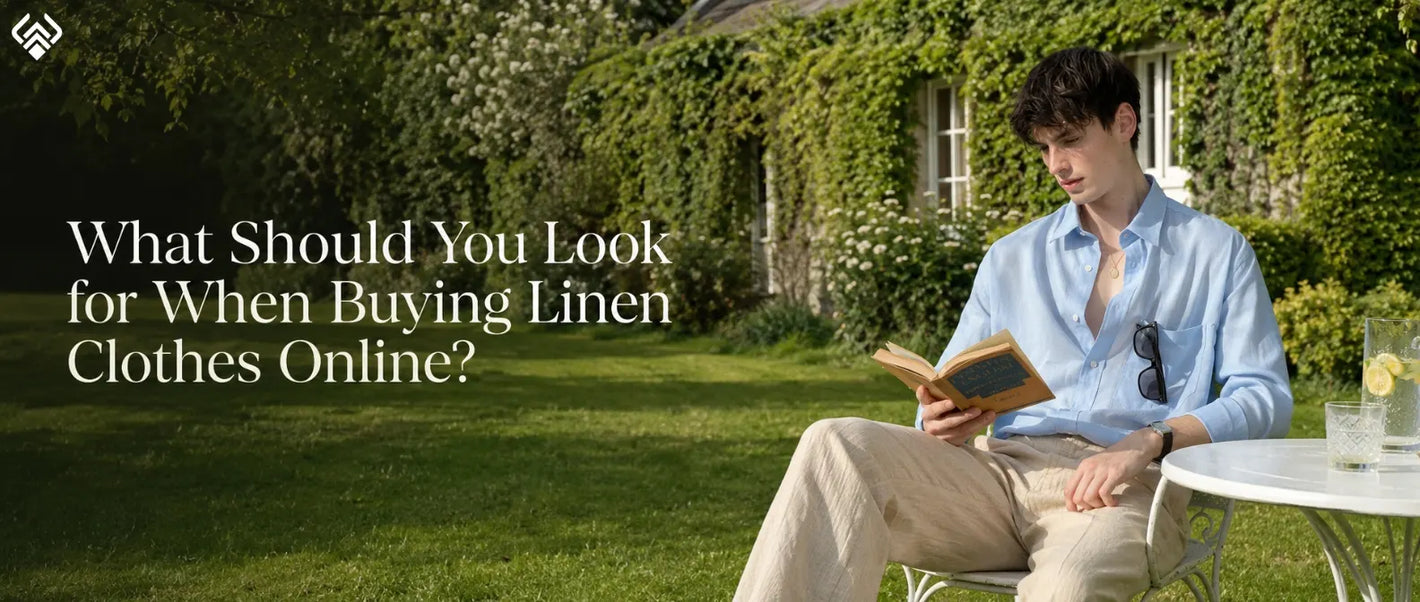
When buying linen clothes online, check the fabric weight in GSM, the fiber content percentage, the weave description, and the origin of the flax before making a decision, since photos alone cannot tell you how a linen garment will actually perform. A listing that only shows lifestyle photography without these details is usually hiding a lower-quality fabric, while a transparent listing with specific numbers gives you a real basis for comparison across brands.
Buying linen online carries a specific challenge that other fabrics do not always have: you cannot touch or hold the fabric up to light before purchasing, and thin, low-GSM linen photographs almost as well as heavier, better-constructed pieces. This is exactly why so many people end up disappointed with linen bought online, not because linen itself is unreliable, but because they had no way to judge quality from a product photo alone. Once you know which details to look for in a listing, buying linen clothes online becomes far less of a gamble.
Why Fabric Weight Information Matters More Than Photos
GSM, or grams per square meter, is the most reliable number for judging linen quality before you buy, and any listing worth trusting should include it. Lightweight linen under 150 GSM photographs beautifully but wrinkles heavily and can feel almost sheer in bright light, which is fine for a beach cover-up but disappointing for a shirt meant to last through regular wear. Linen in the 170 to 200 GSM range holds its shape better, resists heavy creasing, and generally signals a more durable, higher-quality garment, even though it may look nearly identical to lighter linen in a product photo.
Linen Mark


If a listing does not mention GSM at all, that omission itself is worth noticing. Brands confident in their fabric quality tend to lead with this number because it is a genuine selling point, while listings relying purely on styling and lifestyle imagery are often doing so because the underlying fabric would not stand out on numbers alone. Comparing GSM across a few listings before buying takes less than a minute and prevents the most common disappointment people report with linen bought online.
Checking Fiber Content and Origin Claims
What "100% Linen" Actually Guarantees
A listing labeled "100% linen" should mean exactly that, but blends are common and not always clearly disclosed, so checking the fabric composition section rather than just the product title matters. A linen-cotton or linen-viscose blend is not inherently bad, and can even reduce wrinkling, but it will not deliver the same breathability or long-term softening that pure linen provides, so knowing which one you are buying sets accurate expectations. If a listing's title says "linen" but the fine print reveals a blend under 55 percent linen fiber, the garment will behave much closer to the secondary fiber than to true linen.
Understanding Origin and Certification Claims
Origin claims like "French linen" or "European flax" should ideally be backed by a specific certification, most commonly the European Flax trademark, which confirms the flax was grown and processed under audited standards in Western Europe. A listing that uses these terms without any certification reference is not necessarily lying, but it also is not offering proof, so treating unverified origin claims with a bit of healthy skepticism is reasonable. Genuine, well-sourced linen brands tend to be specific about this because sourcing transparency is something they can back up, not just a marketing phrase.
Evaluating Construction Details in Product Listings
Seams, Stitching, and Finishing
Construction quality is harder to judge online than fabric weight, but a few details in product photos and descriptions still offer clues. Close-up images of seams, especially at stress points like underarms, inseams, and button plackets, should show even, reinforced stitching rather than loose or uneven threads, since this is where lower-quality garments typically fail first after a few washes. Descriptions mentioning flat-felled seams or reinforced stitching at stress points are generally a good sign that a brand paid attention to construction details beyond the fabric itself.
Under 2999


Sizing Charts and Shrinkage Notes
Linen shrinks somewhat with washing, typically around 3 to 5 percent on the first wash if it has not been pre-shrunk during manufacturing, so a listing that includes a specific sizing chart with actual measurements, rather than just small, medium, and large, is far more useful than one without. Some brands note whether the fabric has been pre-washed or pre-shrunk before shipping, which is a meaningful detail since it affects whether you should size up slightly to account for the first wash. Missing sizing details is one of the more common reasons for returns with linen bought online, so checking this section closely before ordering saves the hassle of exchanges later. includes detailed measurements and pre-wash information for exactly this reason.
Linen vs Other Fabrics: What to Expect Before You Buy
The table below compares linen to the fabrics most commonly considered alongside it when shopping online, focusing on what a buyer should realistically expect from each before making a purchase.
|
Fabric |
Typical Online Price Accuracy |
Breathability |
Durability |
Care Level |
What to Verify Before Buying |
|
Linen (170–200 GSM) |
Moderate, GSM varies widely by listing |
Excellent |
High |
Moderate |
GSM, fiber percentage, weave tightness |
|
Cotton (Poplin/Oxford) |
High, more standardized |
Good |
High |
Low to moderate |
Thread count, weave type |
|
Polyester Blend |
High, consistent manufacturing |
Low to moderate |
Very high |
Low |
Blend ratio, moisture-wicking claims |
|
Silk |
Low, quality varies significantly |
Moderate |
Low, delicate |
High |
Momme weight, care instructions |
|
Moderate |
Good |
High |
Low to moderate |
Blend ratio, which fiber dominates |
Linen stands out in this comparison as one of the fabrics where online listings vary the most in accuracy, mainly because GSM and weave quality are so rarely standardized across brands the way thread count is for cotton. This is exactly why checking specific numbers rather than relying on marketing language or photography is more important with linen than with almost any other fabric on this list.
Reading Return Policies and Customer Reviews the Right Way
Return policies matter more for linen than for many other fabrics, precisely because fabric weight and hand feel are so difficult to judge from photos alone. A brand offering a reasonable return window, ideally 30 days or more, signals more confidence in its product than one with a short or restrictive return policy, and this is worth checking before buying, especially for a first order from an unfamiliar brand. Reviews mentioning how a garment held up after several washes are far more useful than reviews focused only on how it looked on arrival, since linen's real test comes after the first few wash cycles, not on day one.
Full Sleeve Shirts


Photos submitted by other customers, when available, are particularly useful for judging true fabric weight and drape, since they are not staged under the same studio lighting and styling as a brand's official product photography. If a listing has no reviews at all, treating the purchase as somewhat experimental and starting with a lower-cost piece before committing to a full wardrobe from that brand is a reasonable way to limit risk. For anyone building a linen wardrobe gradually, is worth reviewing early on too, since understanding proper wash temperatures and drying methods in advance helps you get accurate expectations for how any newly purchased piece will perform over time.
Buying linen clothes online does not have to be a gamble once you know which details actually matter: fabric weight in GSM, verified fiber content, honest construction information, and a return policy that reflects confidence in the product. A little bit of label reading goes a long way toward avoiding the disappointment of a thin, poorly constructed piece that looked fine in a photo but fell apart after a few washes. If you are ready to build out a linen wardrobe with pieces that are transparent about weight, sourcing, and construction from the start, looking for brands that lead with these specifics rather than styling alone is the simplest way to buy with confidence.
Frequently Asked Questions
How do I know if linen clothing is good quality before buying online?
Check the listing for a specific GSM number, ideally in the 170 to 200 GSM range for shirting-weight linen, along with the fiber content percentage and any origin certification like European Flax. Good quality linen listings tend to be specific about these details rather than relying only on styling photography. Reviews mentioning how the fabric performed after multiple washes are also a reliable indicator, since early appearance does not always predict long-term durability.
Is it safe to buy 100% linen clothing without trying it on first?
Yes, as long as the brand provides a detailed sizing chart with actual measurements and a reasonable return policy, since linen sizing can run differently depending on whether the fabric was pre-shrunk before shipping. Ordering your usual size in a brand with clear sizing information generally works well, but sizing up slightly is a safer bet if the listing does not specify pre-shrinking. Checking customer reviews for comments about fit accuracy adds another useful layer of confidence before ordering.
What GSM is best for linen shirts bought online?
For shirting-weight linen meant for regular wear, 170 to 200 GSM offers the best balance of breathability and durability, holding its shape well without feeling heavy. Lighter linen under 150 GSM is better suited to occasional, casual wear where heavier creasing and a sheerer feel are less of a concern. Checking this number before buying is one of the single most useful things you can do to predict how a linen shirt will actually perform once it arrives.
Should I be worried about linen clothing shrinking after the first wash?
Some shrinkage, typically 3 to 5 percent, is normal for linen that has not been pre-shrunk during manufacturing, so checking whether a listing mentions pre-washing or pre-shrinking helps set accurate expectations before you order. If a listing gives no information on this, washing the first time at a gentle 30°C cycle and air drying rather than using high heat minimizes shrinkage as much as possible. Buying true to size with this in mind, or sizing up slightly for unwashed linen, avoids most fit surprises.
How can I tell if "French linen" claims online are actually true?
Look for a specific reference to European Flax certification in the product description, since this is the verifiable standard that confirms flax was grown and processed in Western Europe under audited conditions. A listing using the term "French linen" without any certification reference or sourcing detail is making an unverified claim, which does not necessarily mean it is false but does mean there is no proof backing it up. Brands genuinely sourcing certified flax tend to mention this specifically because it is a meaningful quality signal worth highlighting.
What return policy should I look for when buying linen clothing online?
A return window of 30 days or more generally signals a brand's confidence in its product quality and sizing accuracy, which matters more for linen than for fabrics with more standardized fit and feel. Shorter or more restrictive return windows are worth noting as a caution sign, particularly for a first order from a brand you have not purchased from before. Reading the specific conditions, like whether tags need to remain attached or whether worn items can be returned after a single wash, avoids surprises if the fit or fabric weight does not match expectations.


2 comments
jgxil9
v9jm9d